
Affiliate Marketing for Beginners: 7 Essential Lessons for Building Long-Term Success
Affiliate marketing is one of the most accessible ways to start an online business. You don’t need to create your own products, manage inventory, or handle shipping. Instead, you earn commissions by recommending products or services offered by other businesses.
However, successful affiliate marketing involves much more than sharing links and hoping someone makes a purchase.
Understanding the fundamentals can help beginners avoid common mistakes and build a more sustainable online business.
1. Understand How Affiliate Marketing Works
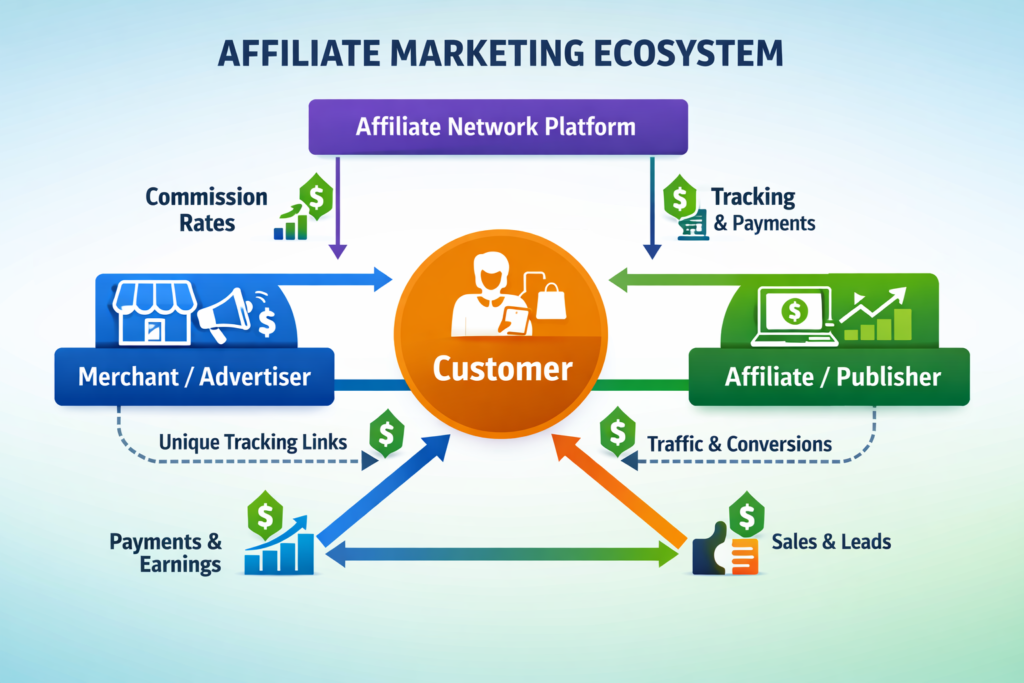
Affiliate marketing involves three main participants: the product creator, the affiliate marketer, and the customer.
The product creator provides something valuable. The affiliate introduces potential customers to that product through a unique tracking link. When someone completes a qualifying purchase or action, the affiliate earns a commission.
Commission structures vary. Some programs pay a percentage of each sale, while others offer fixed payments or recurring commissions.
Before joining any program, understand its payment terms, tracking rules, and refund policies.
2. Choose a Niche You Can Learn About
A niche is a specific topic or market you focus on.
Examples include personal finance, gardening, fitness, technology, and online education.
Beginners sometimes choose niches based entirely on potential commissions. However, promoting products in an unfamiliar market can make creating helpful content difficult.
Choose a subject you’re interested in learning about and that has an audience actively seeking information.
You don’t need to be an expert immediately. You do need a willingness to research, learn, and share accurate information.
3. Focus on Solving Problems
People rarely search online because they want to click an affiliate link.
They search because they have questions, challenges, or goals.
For example, someone interested in starting a blog might want to know how to choose a domain name, create useful articles, or attract visitors.
An educational article answering those questions provides value before introducing any product.
The more effectively your content helps readers solve problems, the more reasons they have to return.
4. Build Trust Before Expecting Sales
Trust is one of the most important assets an affiliate marketer can develop.
Readers should feel confident that recommendations are based on usefulness rather than commission size.
Be transparent about affiliate relationships. Explain product advantages and limitations honestly, and avoid promising unrealistic results.
If you haven’t personally tested a product, don’t pretend you have.
A smaller audience that trusts your information can be more valuable than a large audience that ignores your recommendations.
5. Learn the Basics of Traffic Generation
Even excellent content needs visitors.
Traffic can come from search engines, social media, videos, email newsletters, and online communities.
Each method requires different skills and levels of effort.
For beginners, focusing on one or two traffic sources is often more manageable than trying everything simultaneously.
Search engine traffic may take time to develop, while social media can help distribute useful content more immediately.
The goal isn’t simply attracting visitors. It’s attracting people interested in your topic.
6. Understand the Importance of Email Marketing
An email list allows you to maintain contact with readers who choose to hear from you.
Instead of depending entirely on social media algorithms or search engine rankings, you can communicate directly with subscribers.
Educational emails might include tutorials, practical tips, industry insights, or answers to frequently asked questions.
Consistency matters, but usefulness matters more.
Respect subscribers’ time, obtain permission before emailing, and provide a simple way to unsubscribe.
7. Measure Results and Keep Improving
Affiliate marketing involves testing and learning.
Useful measurements include website visits, link clicks, email engagement, conversions, and commissions earned.
These numbers help identify what works and what needs improvement.
For example, an article receiving traffic but few clicks might need clearer explanations or more relevant recommendations.
Avoid judging your entire business based on a few days of activity.
Look for patterns over time, make thoughtful adjustments, and continue improving your skills.
Final Thoughts
Affiliate marketing isn’t a shortcut to effortless income. It’s a business model that rewards useful content, effective communication, and consistent effort.
Beginners who concentrate on learning their audience’s needs, building trust, and developing practical marketing skills create a stronger foundation for long-term progress.
The most important lesson is simple: Help people first, and let your marketing grow from the value you provide.