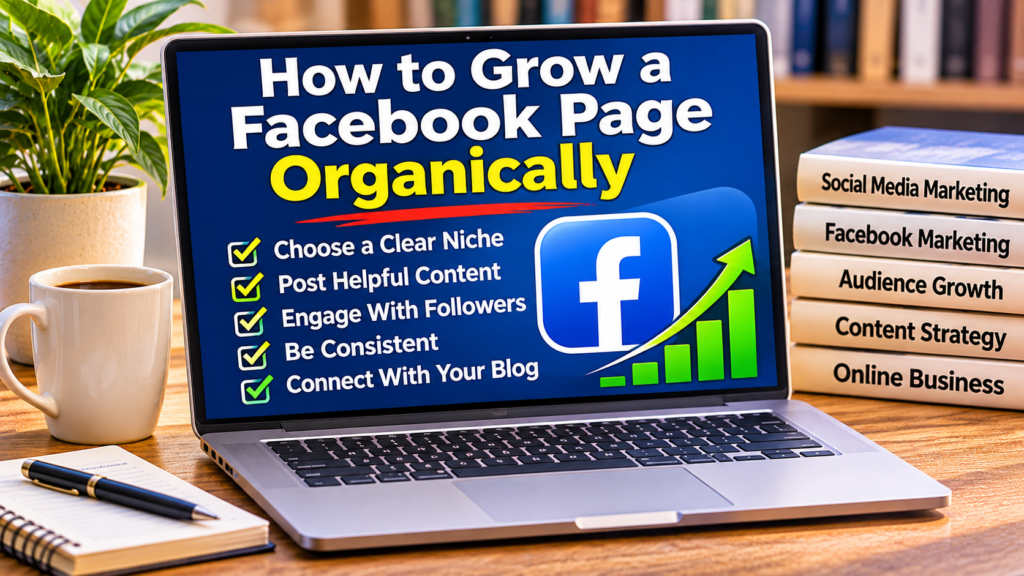

How to Grow a Facebook Page Organically
Starting a Facebook page is easy. Getting people to follow it, interact with your posts, and become interested in your content is another story.
You might create a professional-looking page, write an introduction, and publish your first few posts, only to discover that hardly anyone sees them.
Sound familiar?
If you’re wondering how to grow a Facebook page organically, you’re certainly not alone.
Many beginners assume they need hundreds of dollars in advertising to attract followers. While paid advertising can help reach new audiences, it’s not the only way to build a Facebook presence.
Organic growth involves attracting people through helpful content, meaningful conversations, and consistent activity rather than paying to promote every post.
It takes time, patience, and experimentation. However, it can be a practical approach for small business owners, bloggers, and affiliate marketers working with limited budgets.
In this guide, we’ll explore nine strategies that can help you build a Facebook page people actually want to follow.
Why Learning How to Grow a Facebook Page Organically Matters
Facebook offers businesses and content creators a way to connect with people interested in specific subjects.
Whether your niche is online marketing, health and wellness, personal development, or another topic, a Facebook page can become a place to share useful information and build relationships.
However, creating a page doesn’t automatically give you an audience.
Facebook determines how widely content is distributed using a variety of signals, including relevance and user interactions.
That means even a helpful post might reach relatively few people.
Organic growth also isn’t guaranteed. Some pages grow quickly, while others take much longer to attract an engaged audience.
The key is to focus on what you can control: the quality of your content, how consistently you publish, and how you interact with your audience.
Let’s look at nine ways to improve your approach.
1. Choose a Clear Niche for Your Facebook Page
One of the biggest mistakes beginners make is trying to appeal to everyone.
Imagine visiting a Facebook page that shares affiliate marketing advice on Monday, cooking recipes on Tuesday, and unrelated entertainment posts on Wednesday.
You might have difficulty understanding what the page is actually about.
A focused niche gives visitors a clearer reason to follow you.
For example, an online marketing page could cover blogging, email marketing, social media strategies, and affiliate marketing.
These subjects complement one another and appeal to a similar audience.
How to choose your niche
Start by asking yourself three questions:
- What subject do I enjoy learning about and discussing?
- What problems does my intended audience want to solve?
- Can I consistently create helpful content about this subject?
You don’t have to know everything about your niche.
You simply need a clear direction and a willingness to learn.
As your experience grows, you’ll discover which topics generate the most interest.
Beginner tip: Choose a niche broad enough to provide plenty of content ideas but focused enough that visitors understand what they’ll gain by following your page.
2. Create a Professional and Welcoming Facebook Page
First impressions matter.
When someone discovers your page, they may look at your profile picture, cover image, description, and recent posts before deciding whether to follow.
Your page doesn’t need expensive branding.
A clean, organized presentation is often enough.
Important elements to review
Profile picture: Choose an image that clearly represents your business or brand.
Cover image: Use a design that reflects your niche and is readable on mobile devices.
Page description: Explain what visitors can expect from your content.
Website link: If you have a relevant website, make it easy for interested visitors to find it.
Contact information: Include appropriate contact details when necessary.
Recent posts: Publish useful content so new visitors can see that your page is active.
For example, a page focused on affiliate marketing might use this description:
“Practical affiliate marketing, blogging, and online business tips for beginners who want to learn and grow.”
It’s simple, specific, and tells visitors what the page offers.
You can also pin a useful introductory post that welcomes new followers and explains your page’s purpose.
3. Publish Helpful Content Instead of Constant Sales Pitches
This is one of the most important strategies for growing a Facebook page.
People generally don’t follow pages because they want to see advertisements all day.
They follow because something interests them.
That might be helpful advice, entertaining content, useful information, or a shared interest.
If every post tells people to buy something, you may struggle to build meaningful engagement.
What should you post?
Consider rotating between several types of content.
Educational tips
Share one practical idea your audience can use.
For example:
“Starting a blog? Focus on answering one specific question in each article instead of trying to cover everything at once.”
Common mistakes
Explain a mistake beginners frequently make and how to avoid it.
Questions
Invite readers to share their experiences.
For example:
“What’s the biggest challenge you’ve faced when trying to grow your online business?”
Short checklists
Provide three to five useful reminders related to your niche.
Personal observations
Share something you’ve learned while building your business.
These posts can provide value without requiring complicated graphics or videos.
And when you do recommend a product, make sure it’s relevant to the conversation.
Helpful content builds familiarity. Constant promotion can make people lose interest.
4. Post Consistently Without Overwhelming Yourself
Consistency is important, but it doesn’t mean you need to publish ten times every day.
For beginners, that kind of schedule can quickly become exhausting.
Instead, choose a routine you can realistically maintain.
You might begin with one helpful post per day or several posts each week.
The right schedule depends on your available time, audience, and ability to create useful content.
Create a simple weekly content plan
Here’s an example:
- Monday: Share a beginner tip.
- Tuesday: Explain a common mistake.
- Wednesday: Ask an engaging question.
- Thursday: Share a short educational checklist.
- Friday: Offer a practical how-to tip.
- Saturday: Discuss something you’ve learned.
- Sunday: Share a helpful reminder or reflection.
This gives you variety without requiring a completely new strategy every day.
You can also prepare several posts in advance.
Meta Business Suite offers tools for managing and scheduling content, which may help you stay organized.
If you’re working a full-time job or managing other responsibilities, scheduling posts can make your social media routine easier to maintain.
Remember that consistency should support your business, not take over your life.
5. Encourage Genuine Conversations With Your Followers
A Facebook page isn’t just a place to publish information.
It’s also an opportunity to interact with people.
When someone leaves a thoughtful comment, responding can help make your page feel more welcoming.
You don’t need to write long replies.
Sometimes a simple answer or follow-up question is enough.
Ways to encourage engagement
Ask questions related to your niche.
Invite readers to share their experiences.
Respond to comments when appropriate.
Thank people for useful contributions.
Avoid turning every discussion into a product recommendation.
For example, suppose you publish a post about building an email list.
Someone comments that they’re having trouble getting subscribers.
Instead of immediately sending them an affiliate link, you might explain a simple way to improve their signup offer.
That helpful interaction could make a stronger impression than a sales pitch.
Don’t force engagement
Avoid tactics that pressure people to like, share, or comment simply to increase your numbers.
Focus on conversations that are genuinely relevant to your content.
A small number of meaningful interactions can be more useful than dozens of comments that have little to do with your topic.
6. Use Facebook to Introduce People to Your Website
If you’re building an online business, your Facebook page shouldn’t necessarily be your only online presence.
A website gives you more control over how your content is organized and presented.
For example, you can publish detailed articles, create resource pages, and offer email subscriptions.
Facebook can help introduce interested people to those resources.
Connect social media with your blog
Suppose you publish a detailed article about getting free traffic for affiliate marketing.
You could create a short Facebook post highlighting one useful strategy from the article.
Then, where appropriate, provide a link for readers who want the complete explanation.
For example:
“One way to attract visitors without paying for every click is to publish helpful blog articles that answer questions people are already searching for. I’ve put together a detailed guide covering seven beginner-friendly traffic strategies.”
You could then link to your article.
If you’d like to explore those strategies, read my guide on how to get free traffic for affiliate marketing.
This approach connects your social media activity with content you own.
However, don’t make every Facebook post a link to your website.
Continue publishing useful standalone posts so followers receive value directly on Facebook.
7. Build an Email List Alongside Your Facebook Audience
Facebook followers can be valuable, but social media platforms control how content is distributed.
Even if someone follows your page, they won’t necessarily see every post.
That’s one reason email marketing can complement your social media strategy.
An email list allows people who are interested in your content to subscribe voluntarily and receive updates directly.
Give people a reason to subscribe
Consider offering a free resource related to your niche.
For example:
- A beginner’s guide.
- A short checklist.
- A useful report.
- An educational email series.
- A collection of practical tips.
Make sure the resource addresses a problem your audience wants to solve.
Once someone subscribes, deliver what you promised and continue sharing helpful information.
Choose an email marketing service
You’ll need a platform to manage subscribers and send emails.
One option is AWeber, which offers tools for signup forms, newsletters, and automated follow-up sequences.
These features can be helpful when you’re building a list while also managing your website and social media content.
For a more detailed introduction, read my article on how to build an email list from scratch.
The goal isn’t to pressure every Facebook follower into subscribing.
It’s to provide an additional way for interested people to stay connected.
8. Use AI to Plan and Organize Your Facebook Content
Coming up with fresh content ideas can be challenging, especially when you’re posting regularly.
Artificial intelligence tools can help with brainstorming, planning, and drafting.
For example, you can ask an AI assistant to generate educational post ideas based on your niche.
Example AI prompts
Weekly content planning:
“Create seven short Facebook post ideas for a page focused on beginner affiliate marketing. Make each post educational, conversational, and free from exaggerated income claims.”
Engagement questions:
“Suggest ten genuine discussion questions for people interested in blogging and online marketing.”
Content repurposing:
“Turn this blog article into five short Facebook posts. Each post should provide a useful takeaway without sounding like an advertisement.”
These prompts can save time and help you maintain a consistent posting schedule.
However, don’t publish AI-generated content without reviewing it.
Make sure the information is accurate, relevant, and consistent with your page’s voice.
Add your own observations when possible.
AI can support your marketing strategy
If you’re interested in using artificial intelligence for other aspects of affiliate marketing, you can explore my AI Affiliate Starter Kit.
It’s a resource I created for people who want to learn practical ways to combine AI tools with affiliate marketing.
AI can make content creation more efficient, but it doesn’t replace the need to understand your audience and provide useful information.
9. Measure Progress Beyond Your Follower Count
It’s exciting to see your Facebook follower count increase.
But followers aren’t the only measure of progress.
A page with thousands of followers who rarely interact may not be as useful to your business as a smaller page with genuinely interested readers.
Instead of focusing only on follower numbers, pay attention to several indicators.
What should you monitor?
Post reach: How many people are seeing your content?
Engagement: Are people reacting, commenting, or sharing?
Website visits: Are interested readers visiting your website?
Email subscriptions: Are people choosing to stay connected?
Content performance: Which subjects consistently generate interest?
Meta Business Suite provides insights that may help you evaluate your page’s performance.
Look for patterns over time rather than judging everything by one post.
For example, if educational tips consistently receive more engagement than promotional posts, that may suggest your audience prefers practical information.
You can use that observation to improve your future content.
Don’t compare your beginning to someone else’s results
Established pages may have spent years building their audiences.
Comparing your first few weeks to their results can create unrealistic expectations.
Instead, focus on learning what works for your particular audience.
Even a small amount of genuine engagement can provide useful information.
How Long Does It Take to Grow a Facebook Page Organically?
There’s no guaranteed timeline for organic Facebook growth.
Some pages attract followers quickly because they already have an audience elsewhere.
Others grow slowly through consistent publishing and conversations.
Factors that may influence growth include your niche, content quality, audience interest, competition, and how Facebook distributes your posts.
You might publish daily for several weeks and see only modest growth.
That doesn’t automatically mean your strategy is failing.
However, it also doesn’t mean you should continue doing exactly the same thing forever.
Review your results and make reasonable adjustments.
For example, you might experiment with different topics, posting times, or content formats.
The goal is to learn from your audience rather than follow a rigid formula.
Common Mistakes to Avoid When Growing a Facebook Page
Before finishing, let’s look at several mistakes that can slow your progress.
Buying followers: Purchased followers may not be genuinely interested in your content and can create misleading audience numbers.
Posting only affiliate links: Give people useful reasons to follow your page beyond product promotions.
Ignoring comments: When possible, respond to legitimate questions and conversations.
Changing niches constantly: Keep your page’s main purpose clear.
Publishing inaccurate information: Check important facts before sharing advice.
Expecting immediate results: Organic growth can take time.
Copying competitors: Learn from other pages, but develop your own content and voice.
Posting without a plan: A simple weekly schedule can help maintain variety and consistency.
Focusing only on follower counts: Pay attention to meaningful engagement and your broader business goals.
Avoiding these mistakes can help you create a more useful experience for your audience.
A Simple 30-Day Facebook Page Growth Plan
If you’re starting from scratch, here’s a manageable plan.
Week 1: Set up your foundation
Choose your niche and define your intended audience.
Complete your page description, profile image, cover image, and relevant business information.
Publish a welcoming introductory post.
Week 2: Establish a posting routine
Create several educational posts.
Experiment with helpful tips, questions, and short checklists.
Respond to relevant comments.
Week 3: Connect your content
Identify a helpful article on your website that relates to your Facebook audience.
Create a short post explaining one useful takeaway.
Include a website link when it genuinely adds value.
Week 4: Review your results
Look at your page insights.
Which posts received the most meaningful interactions?
What questions did people ask?
Which subjects seemed to interest your audience?
Use those observations to plan the next month.
You don’t need to achieve a particular follower count within 30 days.
The purpose is to establish a repeatable routine and begin understanding your audience.
Final Thoughts: Build Relationships Before Chasing Numbers
Learning how to grow a Facebook page organically involves more than publishing posts and hoping people follow.
It requires understanding your audience, sharing useful information, encouraging genuine conversations, and staying consistent.
You don’t need expensive software or a large advertising budget to begin experimenting with organic content.
Start with a clear niche.
Publish helpful posts.
Respond to your audience.
Connect your Facebook presence with your website and email list.
And review your results so you can improve over time.
Remember that organic growth isn’t guaranteed, and it may take longer than you expect.
But every useful post gives you another opportunity to reach someone who may benefit from your content.
Don’t focus only on building a bigger Facebook page. Focus on building a page that’s genuinely worth following.
Affiliate disclosure: This article contains affiliate links. If you purchase through one of these links, I may earn a commission at no additional cost to you. Results and earnings are not guaranteed.