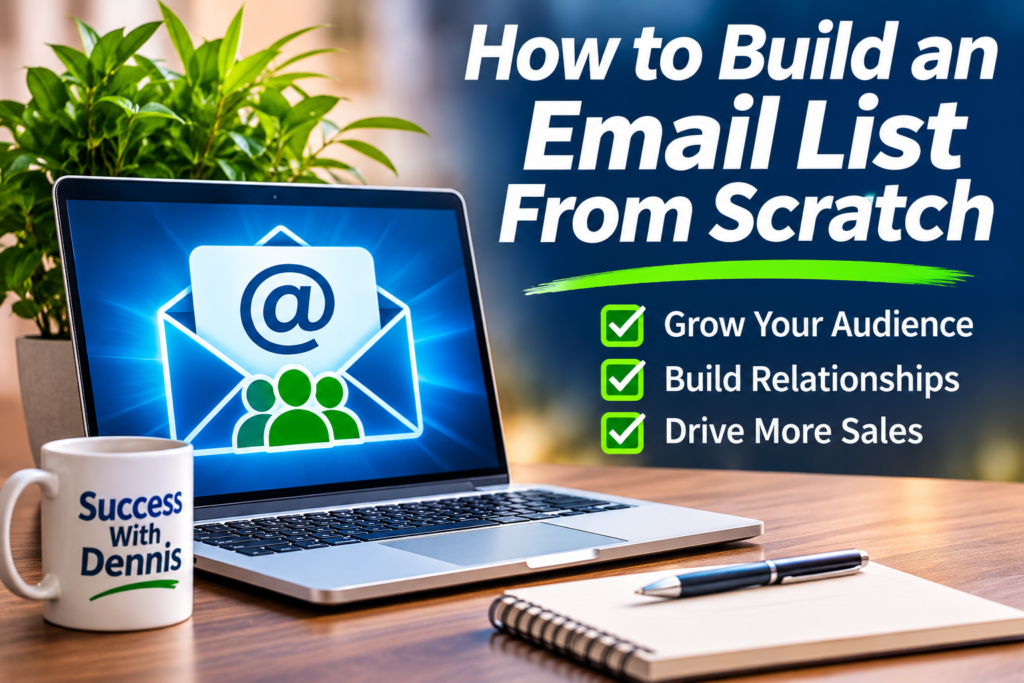

Learning how to build an email list from scratch might be one of the smartest decisions you can make for your online business.
If you’re just getting started with internet marketing, you’ve probably heard the phrase “the money is in the list.”
But what does that really mean? And more importantly, how do you start building an email list when you don’t have an audience, a big advertising budget, or years of marketing experience?
The good news is that you don’t need any of those things to get started.
You just need a simple strategy, something valuable to offer, and a willingness to stay consistent.
Ok, let’s learn how to build an email list from scratch right now.
Why Learning How to Build an Email List From Scratch Matters
Social media platforms are great for attracting attention, but there’s one major problem.
You don’t control them.
Facebook can change its algorithm. Your posts might stop reaching people. Advertising costs can increase, and accounts can sometimes get restricted without warning.
An email list gives you a more direct way to communicate with people who have chosen to hear from you.
Instead of hoping someone sees your latest social media post, you can send useful information directly to their inbox.
Of course, not everyone will open every email. But having an engaged list gives you an opportunity to build relationships over time.
And relationships are what make online marketing work.
Step 1: Choose a Specific Audience
One of the biggest mistakes beginners make is trying to attract everyone.
Instead, think about the type of person you want to help.
Are you targeting people who want to start an online business? Beginners interested in affiliate marketing? Small business owners looking for marketing tips?
The more clearly you understand your audience, the easier it becomes to create content they actually want.
For example, if your audience consists of beginner affiliate marketers, you might offer a free guide explaining how to get started without creating your own products.
Keep your focus narrow enough that visitors immediately understand what you can help them accomplish.
Step 2: Create a Valuable Free Offer
Most people won’t subscribe to an email list simply because you ask them to.
They need a reason.
That’s where a lead magnet comes in.
A lead magnet is something useful you give away in exchange for someone’s email address.
It could be:
- A short PDF guide
- A beginner-friendly checklist
- A collection of helpful templates
- A free video tutorial
- A simple step-by-step training report
Your lead magnet doesn’t have to be complicated or expensive to create.
In fact, a five-page guide that solves one specific problem can sometimes be more useful than a 100-page ebook filled with information someone may never use.
Focus on helping your visitor achieve a small but meaningful result.
Step 3: Set Up a Simple Landing Page
Once you have your free offer, you’ll need somewhere to promote it.
A landing page is a dedicated page designed to encourage visitors to take one specific action.
In this case, that action is subscribing to your email list.
Your page should include a clear headline, a short explanation of what visitors will receive, and a simple signup form.
Avoid cluttering the page with unnecessary links, distracting graphics, or multiple competing offers.
The goal is to make the decision easy.
And remember, your landing page doesn’t have to be perfect before you start sending traffic.
You can always improve it as you learn what works.
Step 4: Set Up Your Welcome Email
Getting someone to subscribe is only the beginning.
What happens next is just as important.
Your first email should welcome your new subscriber, explain what they can expect, and deliver the free resource you promised.
From there, you can create a short series of helpful follow-up emails.
Share useful tips, answer common questions, and introduce ideas that help your subscribers make progress.
Don’t make every message a sales pitch.
People are much more likely to stay subscribed when they feel they’re receiving something worthwhile.
Also, make sure your emails include an easy way to unsubscribe and follow applicable email marketing rules.
If you’re looking for an email marketing platform to manage your subscribers and automate your follow-up messages, I personally use AWeber. It’s worth checking out if you’re ready to start building your own email list.
Step 5: Start Driving Traffic
Now comes the part many beginners find challenging.
Getting visitors to your landing page.
Fortunately, you don’t need to be everywhere at once.
You can start with one traffic source and expand later.
Blogging is one option. Publishing helpful articles gives you opportunities to attract visitors who are searching for answers.
Social media is another option. Sharing useful content in relevant communities can help introduce people to your website.
Paid advertising can also work, but it requires careful testing and a budget you’re comfortable risking.
Whatever method you choose, focus on attracting people who are genuinely interested in your topic.
A smaller list of engaged subscribers is often more valuable than a large list of people who never open your emails.
Step 6: Be Consistent and Patient
When you’re learning how to build an email list from scratch, consistency is far more important than trying to get hundreds of subscribers overnight.
Here’s something every beginner needs to understand.
Email list building takes time.
You might get only a handful of subscribers during your first week. That’s perfectly normal.
Instead of becoming discouraged, concentrate on improving your process.
Test different headlines. Experiment with your lead magnet. Pay attention to which traffic sources bring subscribers who actually engage with your emails.
And most importantly, keep showing up.
Every subscriber represents a real person who has expressed interest in what you have to share.
Treat that relationship with respect.
Final Thoughts
Building an email list from scratch doesn’t require expensive software, complicated funnels, or thousands of dollars in advertising.
It starts with understanding your audience, offering something useful, and creating a simple way for people to stay connected.
You don’t need 10,000 subscribers to begin building a successful online business.
You need your first subscriber.
Then your next one.
And your next.
Over time, those small steps can help you build an audience that trusts your recommendations and looks forward to hearing from you.
This is how to build an email list from scratch
Remember, the goal isn’t just to build a bigger list. It’s to build a better relationship with the people on it.
And that’s something worth investing your time in.
Want a Free Resource to Help You Get Started?
If you’re looking for more ideas on building an online income, grab my free report, Sleeping Money. It’s a helpful resource for exploring ways to create income opportunities online, even if you’re just getting started.
Download Your Free Copy of Sleeping Money Here
In future articles I will go over how to build an email list from scratch